
⭐ Professional Graphic Design vs Non-Professional Graphic Design – A Complete Guide
In today’s digital era, graphic design is not just about making something look “beautiful”; it is about communication, strategy, branding, psychology, customer experience, and business impact. Whether you run a small business or a large company, the visuals you use directly influence how customers perceive your brand.
But there’s a huge difference between professional graphic design and non-professional graphic design. Many people misunderstand this difference and end up choosing low-quality work just because it looks “affordable” at the moment. Later, they face poor branding, lower sales, and weak audience trust.
As a professional graphic designer with 10+ years of experience, I, Chiranjit Dutta, have seen how the quality of design can make or break a business.
This blog explains everything you need to know — clearly and simply.
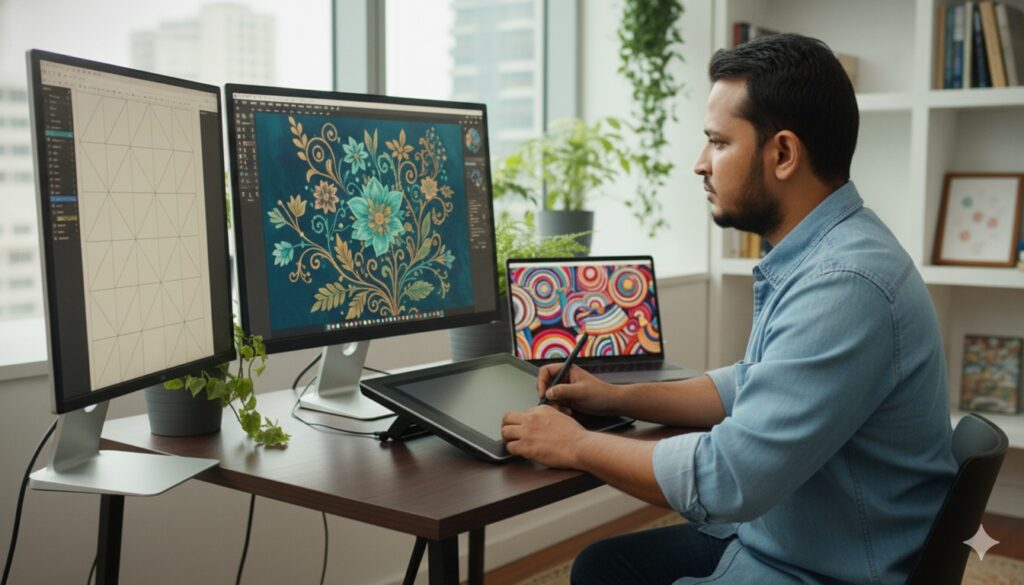
🔵 What Is Professional Graphic Design?
Professional graphic design is a strategic and well-planned visual communication process created by a trained designer using industry-standard tools, creative understanding, and real-world branding knowledge.
✔ Characteristics of Professional Design
- Based on research and brand strategy
- Uses proper typography, color psychology, and layout structure
- Maintains brand consistency
- Solves customer problems
- Enhances marketing impact
- Uses licensed tools and assets
- Created by a skilled designer with industry experience
Professional design is not only about visuals — it’s about purpose + planning + execution.
🔴 What Is Non-Professional Graphic Design?
Non-professional graphic design is usually created by individuals who lack formal design training, branding knowledge, composition understanding, or technical skills.
✖ Characteristics of Non-Professional Design
- No branding strategy
- Random color choices
- Poor layout structure
- Improper fonts or too many fonts
- Overuse of effects
- No market research
- Low-quality, unscalable graphics
- Depends on free templates or copied designs
This type of design may look “okay” at first glance, but it usually delivers zero business impact.
⭐ Chapter 1: Purpose – The Biggest Difference
✔ Professional Design
A professional designer always starts by understanding:
- What is the goal?
- Who is the target audience?
- What emotion should the design create?
- Where will the design be used (print, digital, mobile app, website, advertisement, etc.)
Every decision is aligned with the brand’s purpose.
✖ Non-Professional Design
Non-professionals create designs only by seeing references or copying templates without understanding why the design is being created.
⭐ Chapter 2: Design Process – Structured vs. Random
✔ Professional Design Process
- Client discussion
- Market and competitor research
- Moodboard creation
- Color & typography selection
- Designing with strategy
- Revisions and refinements
- Final delivery in multiple formats
This leads to consistent, high-quality, purposeful output.
✖ Non-Professional Design Process
Their process:
“Open Canva → Choose template → Replace text → Export.”
No thought, no research, no originality.
⭐ Chapter 3: Tools & Technical Knowledge
✔ Professional Designers Use
- Adobe Photoshop
- Adobe Illustrator
- Adobe InDesign
- Figma
- CorelDRAW
- Lightroom
- Industry-standard assets and licensed resources
They understand:
- Resolution
- DPI
- CMYK vs RGB
- Bleed and margins
- File formats
- Vector graphics
- Color correction
✖ Non-Professional Designers Use
- Free mobile apps
- Copying or editing downloaded templates
- Random images with no license
- Poor quality outputs
This results in blurry, unscalable, low-resolution designs that harm a brand’s identity.
⭐ Chapter 4: Branding & Consistency
A brand is built through consistency — same fonts, colors, tone, and visual feel across all marketing platforms.
✔ Professional Design
Maintains strict brand guidelines:
- Fonts
- Color palettes
- Logo placement
- Layout style
- Tone of voice
This creates trust and recognition.
✖ Non-Professional Design
Every design looks different.
No consistency.
No brand recall.
Looks cheap and confusing to customers.
⭐ Chapter 5: Creativity & Originality
✔ Professional Design
Creates original concepts and unique visuals that represent the business.
✖ Non-Professional Design
Uses templates that thousands of people have already used.
Results in generic, forgettable designs.
⭐ Chapter 6: Communication & Psychology
✔ Professional Designers
Understand human behavior:
- Why certain colors increase sales
- Why specific fonts create luxury feelings
- Why some layouts perform better
- How to guide a viewer’s eyes
Professional design communicates messages clearly and emotionally.
✖ Non-Professional Designers
Focus only on decoration — not communication.
⭐ Chapter 7: Marketing Impact
✔ Professional Design Benefits
- Increases conversions
- Creates strong brand image
- Builds customer trust
- Makes advertising more powerful
- Improves social media engagement
- Boosts website performance
✖ Non-Professional Design Harms
- Looks unprofessional
- Loses customer trust
- Poor engagement
- Lower sales
- Damages brand reputation
⭐ Chapter 8: Problem Solving vs Decoration
This is the most important difference.
✔ Professional Design = Problem Solving
Design solves real business problems:
- Low sales
- Weak engagement
- Poor branding
- Low brand recall
- Market competition
✖ Non-Professional Design = Decoration
Looks attractive but does not solve problems.
⭐ Chapter 9: Cost Factor – Cheap vs Valuable
✔ Professional Design
Costs more because it includes:
- Skills
- Training
- Strategy
- Originality
- Tools
- Time
- Research
- Business value
It is an investment.
✖ Non-Professional Design
Costs less because:
- No training
- No research
- No originality
- Uses free tools
- Produces low-quality results
It becomes expensive later when you lose customers and waste advertising money.
⭐ Chapter 10: Real-World Example
Suppose your business wants a logo.
- A professional designer will create a timeless, meaningful, scalable identity for your brand.
- A non-professional designer will copy a random template or overdecorate the logo.
One grows your business.
One destroys your brand image.
⭐ Chapter 11: Why Your Business Needs Professional Design
- Your first impression matters
- Customers judge your business visually
- Professional design builds credibility
- Strong branding increases long-term profit
- It makes your business look trustworthy and established
A business with strong visuals always wins over competitors.
⭐ Conclusion
Professional Graphic Design vs Non-Professional Graphic Design is not a small difference — it’s a difference between:
- Strategy vs Guesswork
- Branding vs Decoration
- Value vs Cost
- Growth vs Struggle
If you want your business to look premium, trustworthy, and powerful, professional design is the only way to go.
This guide by me aims to help businesses understand the real value of professional graphic design and how it can transform their brand image.