In today’s highly competitive digital landscape, building a successful business requires much more than simply offering a good product or service. While technology has created countless opportunities for growth, it has also increased competition, making branding, marketing, and customer experience more important than ever before.
Unfortunately, many businesses continue to make the same mistakes that limit their growth and prevent them from reaching their full potential.
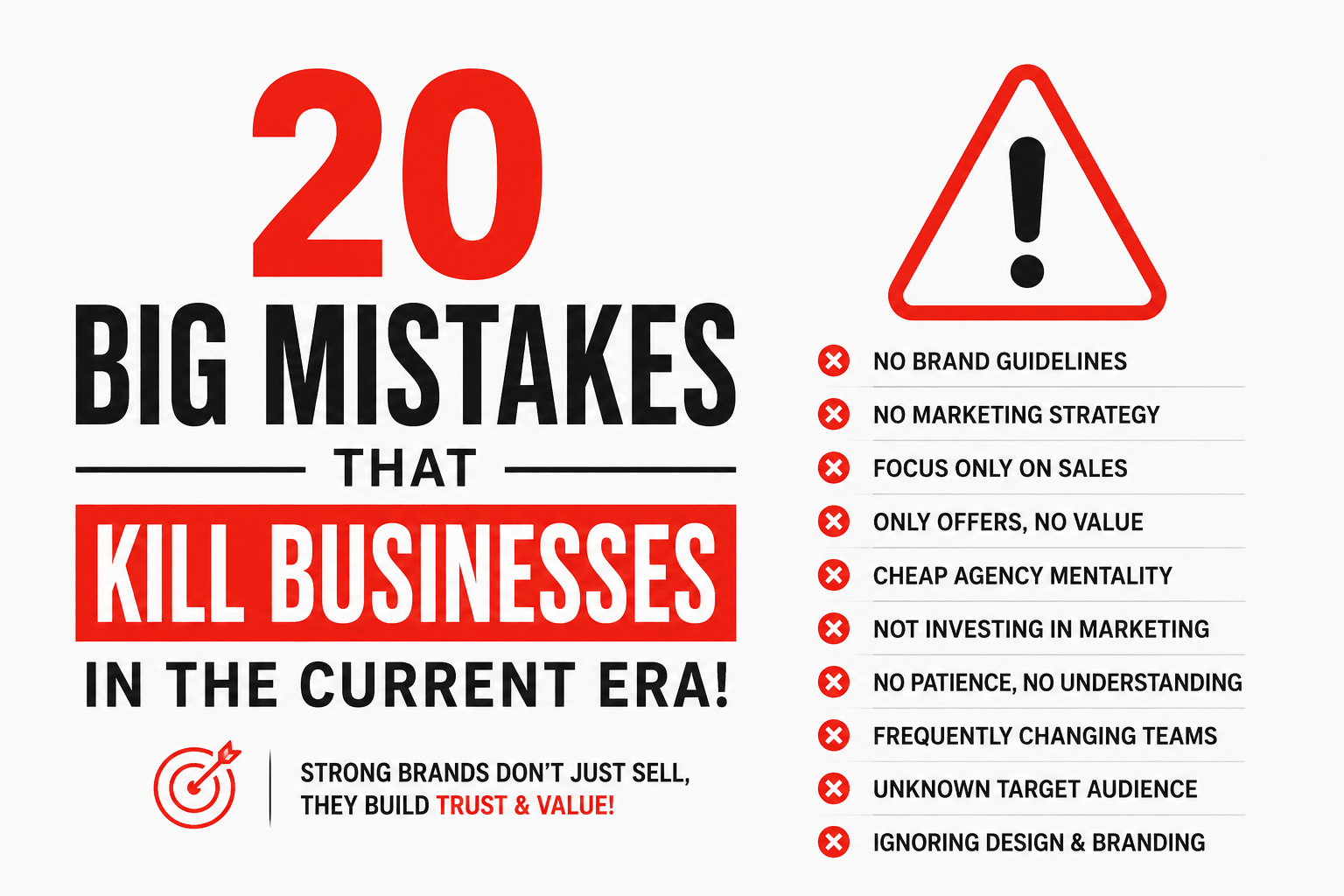
Here are 20 common mistakes that are responsible for business failures in the modern era.
1. Ignoring Proper Brand Guidelines
A brand is more than just a logo. Consistency in colors, typography, messaging, and visual identity creates trust and recognition. Businesses that frequently change their branding often confuse customers and weaken their market position.
2. Operating Without a Clear Marketing Strategy
Many businesses start marketing activities without defining goals, understanding their audience, or creating a long-term plan. Marketing without strategy is simply guesswork.
3. Focusing Only on Sales Instead of Brand Building
Generating sales is important, but sustainable growth comes from building a recognizable and trusted brand. Strong brands attract customers naturally and create long-term value.
4. Creating Promotional Content Only
Constantly posting offers and discounts can overwhelm audiences. Successful brands balance promotional content with educational, entertaining, and informative content that provides genuine value.
5. Choosing the Cheapest Marketing Agency
Price should never be the only deciding factor. The right marketing partner contributes strategy, creativity, expertise, and long-term business growth.
6. Viewing Marketing as an Expense Instead of an Investment
Marketing is one of the most important growth investments a business can make. Companies that underinvest often struggle to compete with stronger and more visible competitors.
7. Lack of Patience and Communication
Effective marketing takes time. Many businesses expect immediate results and abandon strategies before they have an opportunity to succeed.
8. Frequently Changing Marketing Teams
Constantly switching agencies, designers, or marketers disrupts consistency and delays progress. Long-term partnerships usually produce stronger outcomes.
9. Not Understanding the Target Audience
Without understanding customer needs, behaviors, and challenges, businesses often create content and campaigns that fail to connect with the right people.
10. Ignoring Professional Design
Customers often judge a business within seconds. Poor visuals, outdated branding, and inconsistent design can reduce credibility and trust.
11. Failing to Adapt to Digital Trends
The digital world evolves rapidly. Businesses that ignore new platforms, AI tools, content formats, and emerging trends risk becoming irrelevant.
12. Lack of Content Planning
Random posting rarely delivers meaningful results. Consistent content planning helps businesses maintain visibility, engagement, and authority.
13. Copying Competitors Instead of Creating Identity
While competitor research is valuable, imitation does not create differentiation. Unique brands are remembered; copied brands are forgotten.
14. Neglecting Customer Experience
Acquiring new customers is important, but retaining existing customers is often more profitable. Great customer experiences create loyalty and referrals.
15. Not Tracking Marketing Performance
Without data and analytics, businesses cannot identify successful strategies, optimize campaigns, or make informed decisions.
16. Failing to Build Trust
Trust is a major factor in purchasing decisions. Testimonials, case studies, reviews, educational content, and community engagement strengthen credibility.
17. Trying Every Marketing Channel at Once
Being active everywhere without a clear strategy often leads to wasted resources. Focused execution consistently outperforms scattered efforts.
18. Underestimating Creative Content
High-quality photography, video production, and creative design significantly influence audience attention and purchasing decisions.
19. Ignoring Customer Feedback
Businesses that actively listen to customers can adapt faster, improve offerings, and stay relevant in changing markets.
20. Expecting Results Without Involvement
Marketing is a partnership. Businesses that collaborate, communicate, and provide feedback often achieve better results than those expecting agencies or teams to work independently.
Closing Perspective
The most successful businesses understand that growth is not driven solely by products, services, or sales campaigns.
Long-term success comes from building trust, creating value, maintaining consistency, understanding customers, and investing in a strong brand presence.
In today’s digital world, businesses that focus on relationships, reputation, and strategic marketing are the ones that stand out, grow sustainably, and remain competitive for years to come.
A strong business does not grow only by selling products or services. It grows by building trust, creating value, and developing a powerful brand presence.